E-mail: info@f-cat.de | Telefon: +49 (0)30 26 103 29-20
You can get your tickets via the local concert promoter.
See tourdates.
Afro-Reggae

Booking-Agent:
Oliver Arnold
+49 30 261032928
oa@f-cat.de
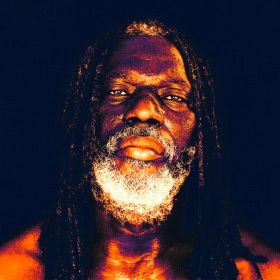
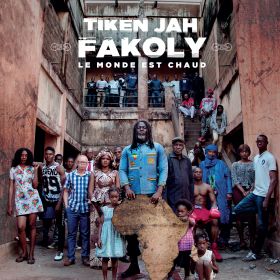
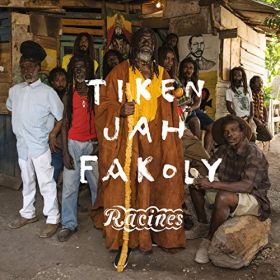
Five years ago, Tiken Jah Fakoly was still living in Abidjan, the economic capital of his country, Ivory Coast. Back then, he was having a house built in his neighbourhood, Yopougon. In just a few years, the Dioula artist from the North had realised his dearest dream: to become an African reggae star. On his albums Mangercratie (Foodocracy - 1996), Cours d’Histoire (History Lesson - 1999), Le Caméléon (The Chameleon - 2000), Françafrique (Franceafrica - 2002) and Coup de Gueule (Yell - 2004), he threw light on the workings of a tortuous political and social situation in simple, direct language. He never missed his carefully chosen targets: politicians who stir up ethnic hatred and then shake their heads over the ensuing bloodbaths, those who feather their nest with the ‘Franceafrica’ system (widespread trafficking and insider trading while the rest of the population goes hungry) and those up to their necks in corruption. His aptness, audacity and persistence soon made him a household name, both at home in Ivory Coast and in the rest of French-speaking Africa, where he was now a major figure. In France, his Françafrique and Coup de Gueule albums went gold and he won a Victoire de la Musique award in 2003. However, his popularity also made him some implacable enemies. In 2002, as the situation worsened throughout the country and systematic, savage repression of ‘foreigners’ (often simply Ivorian Dioula citizens) began, there were threats against Tiken’s life and he was forced into exile. He moved to Bamako in Mali, the native region of his Mandingo ancestors, and began to rebuild his life.
On his new album, Tiken Jah Fakoly becomes the archetypal African, whose multiple identity (Dioula, Akan, Sénoufo, Brazilian, African American) is described in the very first song, as if to underline the continent’s cultural wealth spread throughout the world, and its unity too. Today, the African finds themselves in extreme straits, sidelined a little more each day and left behind in the mad race for globalisation. This is the experience Tiken shares with us on his poignant protest album.
Ouvrez les Frontières (Open the Borders), written by Magyd Cherfi (the Zebda singer) and performed with Soprano (Psy4 de la Rime), is the first part of a triptych focusing on the painful subject of immigration. All too often, the only way Africans can escape their condition is to leave, but their search for Eldorado has its dangers (Où aller où? - Where go where?): the images that unfold are distressing indeed. The final part of the triptych is Africain à Paris (African in Paris - an adaptation of Sting’s Englishman in New York).
This partnership with Magyd began on the previous album with Tonton d'America (Uncle from America) and continues here with two other songs, including the deeply moving Soldier. In a duet with Akon, an American rapper with Senegalese roots, Tiken pays tribute to all his ghetto brothers who are caught up in conflicts not of their making, from Iraq to Somalia.
Today, the African is also torn between tradition and modernity. Tiken inveighs against the mediaeval customs of forced marriage (Ayebada) and sexual mutilation (Non à l’excision - No to Excision). There has always been a touch of sadness in his voice, but (and this is one of the wonders of reggae) it is a combative sadness: tireless and ultimately full of hope.
L’Africain was recorded in the studio Tiken has opened in Bamako, named H. Camara after the Ivorian actor he stayed with early in his career and who was subsequently murdered by death squads. This was the first time the musicians who usually play with him on tour had worked together in the studio, and the event was highly symbolic since the group includes more or less the entire spectrum of the diaspora: Ivorians, Beninese, West Indians and Cape Verdeans, as well as a few French artists (should we say a few ‘Franceafricans’?).
From Bamako to London via Paris, the production by Kevin Bacon and Jonathan Quarmby (the Englishmen who produced Finley Quaye’s first album) brings an amazing, futuristic ‘roots’ touch to the whole album, making L’Africain both Tiken’s most traditional and his most contemporary album so far. This balance owes as much to the inclusion of hip-hop programming and the use of samples (Geoffrey Oreyma’s Yéyé on Non à l’Excision) as it does to the addition of Mandingo instruments (featuring the kora player Toumani Diabaté on Ma Côte d'Ivoire - My Ivory Coast).
This last song brings a glimmer of hope to L’Africain. Today, Tiken’s country is struggling to put itself back together after narrowly avoiding a civil war. Sung with compatriot Beta Simon, Ma Côte d’Ivoire conveys a message of reconciliation, building a bridge between the two sides, two ethnics groups, two sorrows. With its promise of return and unity, it is an act of faith in the future by a hero of today.